
A debt recovery platform serving 10,000+ businesses across Florida, covering automated collection workflows and the compliance reporting that has to account for them.
Fintech · Workflow Automation
SnapDebt
Debt recovery for 10,000+ Florida businesses, 30% faster.
- Product
- SnapDebt — debt recovery platform, 10,000+ businesses across Florida
- Role
- Frontend developer and team lead, Dixeam
- Scope
- React and Redux Toolkit frontend, automated collection workflows, compliance reporting
The tension
Debt recovery is a regulated workflow. The interface has to be auditable, not just usable.
Every automated action needed a record a human could later defend, which made state modelling and reporting the centre of the frontend work rather than an export feature bolted on at the end.
Success looked like
Collection workflows running automatically with reporting that reconciles, and pages fast enough to work in all day.
The constraint
A small team, and page load times that had to come down without a rewrite.
10,000+businesses served
Across Florida, on one platform.
30%faster page loads
From backend and query optimisation.
The product story
Workflow, record, report.
The workspace
Where the recovery work happens.
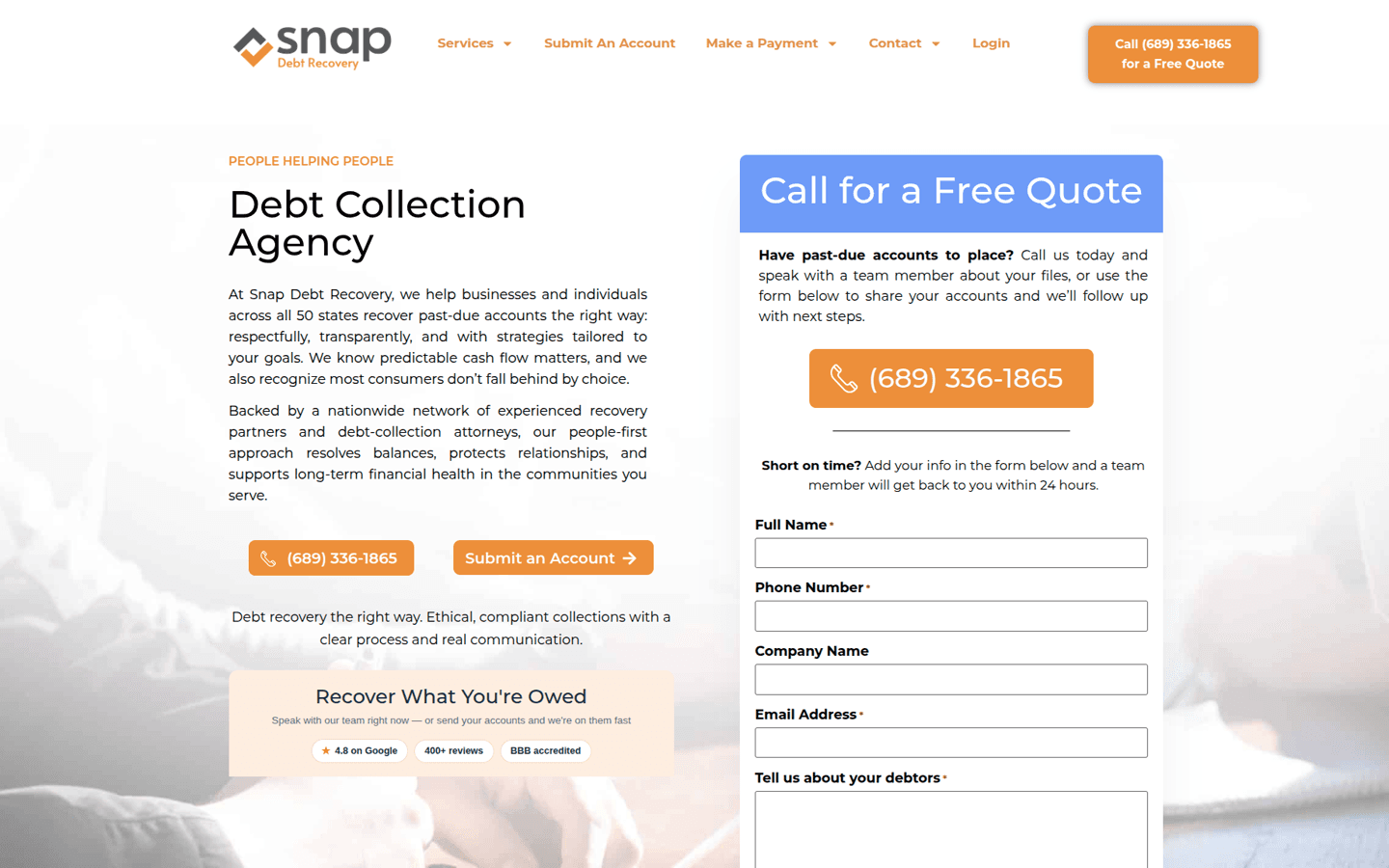
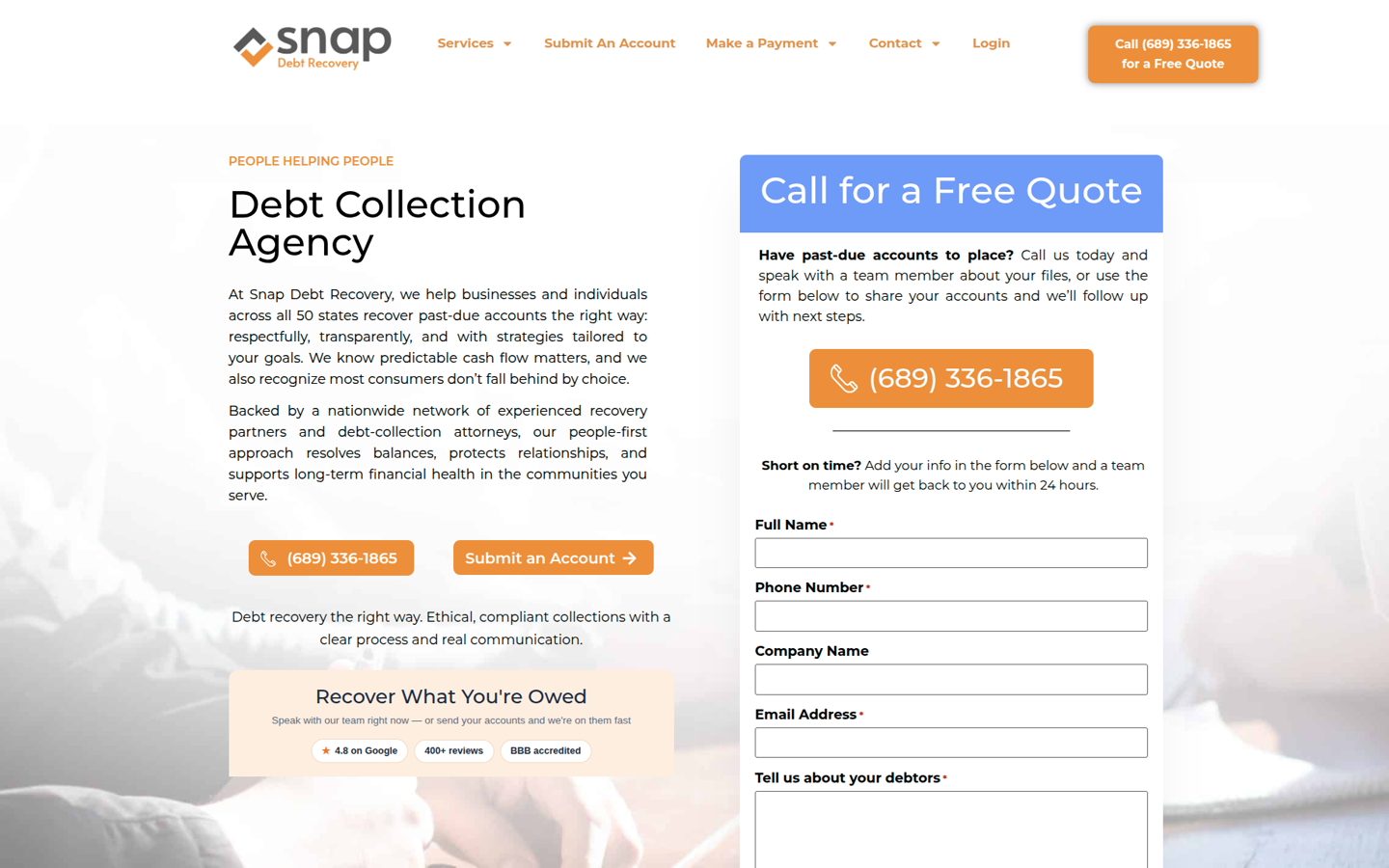
A React and Redux Toolkit interface built for daily operational use across thousands of business accounts.
Mobile
Reachable away from the desk.
The account and workflow views reflow for narrow screens without losing the audit detail.

Workflows
Automation that leaves a trail.
Automated collection workflows are modelled in state so their history stays reportable rather than inferred after the fact.

Walkthrough
The platform in motion
Recorded from the live site.
The trust test
The happy path is only half the product.
An automated action has to be defended
Collection workflows are modelled as explicit states, so the history a compliance report needs is the history the interface was already showing.
The report and the screen disagree
Reporting reads the same workflow state the workspace renders, which makes it a view of the work rather than a reconciliation of it.
It is worked in for eight hours
Backend and query optimisation took page load times down 30%, because operational density is only usable if it is also fast to move through.
The decisions
Three moves carried the story.
Model the workflow, not the screen
Redux Toolkit state shaped around collection workflows, so compliance reporting could read the same history the interface showed.
Take the load times down
Backend and query optimisation cut page load times by 30%, working the data layer rather than trimming the interface.
Lead a small team through it
Delivered as team lead on a small team, which meant the reusable pieces had to be obvious enough for everyone to reach for them.
What I would test next